
ধ্বংসের আগুন নাকি মুক্তির আগুন!
- শমীক লাহিড়ী


The problem of fascism today cannot simply be addressed as that of the potential or variable return and reconstitution of fascism, as if fascism had ever, or could ever, disappear’, only to return and be made again, like some spectral figure from the past. The problem of fascism cannot be represented or understood as that of an historically constituted regime, particular system of power relations, or incipient ideology. Fascism is as diffuse as the phenomenon of power itself.

If we want to resist Fascism we must understand it. Wishful thinking does not help. And reciting optimistic formulae usually proves to be as inadequate and useless as waving the flag of apoliticism. In addition to the problem of the economic and social conditions which have given rise to fascism, there is a human problem which needs to be comprehended. This article will be an attempt towards that endeavor.
Why learn about fascism now?
The problem of fascism today cannot simply be addressed as that of the potential or variable return and reconstitution of fascism, as if fascism had ever, or could ever, disappear’, only to return and be made again, like some spectral figure from the past. The problem of fascism cannot be represented or understood as that of an historically constituted regime, particular system of power relations, or incipient ideology. Fascism is as diffuse as the phenomenon of power itself.
Psychological theories to explain Fascism.
Socialists have long defined "fascist regime" as "the open terrorist dictatorship of the most reactionary, most chauvinistic and most imperialist elements of finance capital.” This understanding has undergone refinement as we have developed the perspective of history. Roger Griffin, perhaps the foremost authority on fascism, defined it as "a genus of political ideology whose mythic core in its various permutations is a palingenetic form of populist ultranationalism”, whereas political definitions have varied across time and space, the psychological underpinnings of fascism/neo-fascism remain identical and enigmatic. The attempt to understand the psychic underpinning of Fascism was first made by the controversial and later much-maligned figure of Wilhelm Reich, whose work has been picked up in different ways by Eric Fromm, Michael Foucault, Gilles Deleuze and Felix Guattari. Later, the celebrated social psychologist Theodor Adorno under the aegis of the Frankfurt school of social research, elaborated on the authoritarian personality, and fascism’s timeless appeal. Hannah Arendt’s understanding of totalitarianism gave more clarity to the social psyche in fascism. More recently there have been scores of “microhistories” on the fascist psyche, and in particular national socialism, one of which stands out on its singular merit, Klaus Theweleit’s study on the “Freikorps”- the proto-nazis and the men who would form the nucleus of National Socialism. There have been works , which have contested the generic nature of fascism, in particular amongst them, Sir Ian Kershaw’s “The nazi dictatorship” stands out for its academic depth, in essence the school of history which tends to separate Nazism from other forms of Fascism, base the distinction on the racist nature of the nazi state, its insatiable thirst for conquest, and placement of “volk” over state. Notwithstanding these fine and subtle differences, national socialism is considered a graft on to the main trunk of fascism. Very recently a more holistic approach to totalitarianism has been taken by Robert Paxton’s work, titled “Anatomy of Fascism” – which as the name suggests, is a consummate and daring attempt to explain fascism from multiple perspectives.
Fascism: “A movement of emotions”
Feelings propel fascism more than thought does. We might call them mobilizing passions, since they function in fascist movements to recruit followers and in fascist regimes to "weld" the fascist "tribe" to its leader. The following mobilizing passions are present in fascism, though they may sometimes be articulated only implicitly:
1. The primacy of the group, toward which one has duties superior to every right, whether universal or individual.
2. The belief that one's group is a victim, a sentiment which justifies any action against the group's enemies, internal as well as external.
3. Dread of the group's decadence under the corrosive effect of individualistic and cosmopolitan liberalism.
4. Closer integration of the community within a brotherhood whose unity and purity are forged by common conviction, if possible, or by exclusionary violence if necessary.
5. An enhanced sense of identity and belonging, in which the grandeur of the group reinforces individual self-esteem.
6. Authority of natural leaders (usually male) throughout society, culminating in a national chieftain who alone is capable of incarnating the group's
7. The beauty of violence and of will, when they are devoted to the group's success in a Darwinian struggle.
“Mass Psychology of Fascism”
Wilhelm Reich, the Freudo-Marxist Viennese psychiatrist, colleague of Freud and erst-while member of the Frankfurt School, published “The Mass Psychology of Fascism” in 1933.Written in early days of Hitler and the Nazi Party’s rise to power, it tried to explain why Germany turned towards Fascism rather than Communism in the period 1928-1933 . The 1920s were an incubation period for what was to infect Germany for a generation, supply the grist for Reich’s analysis, and torment the world for three decades. Reich’s work was an attempted integration of two of the most powerful intellectual currents of his day: Marxism and psychoanalysis He reasoned that one of the main factors was that the working class chose fascism principally because of increased sexual repression which was basis of repressed sexual energy turned toward authoritarianism. This was in marked contrast to the relative sexual liberation of revolutionary Russia. The two questions he raised – “Why do people seek their own repression under authoritarian regimes when it is clearly against their own self and class interests? “& “Why do people crave an authoritarian figure, a transcendent authority behind which they can mask their repression of all-powerful biological impulses that percolate through to the rational mind often accompanied by violent outbursts?.” He surmised that the ideology of Germany at the time was an ‘affective ideology’ anchored in emotions rather than argument. Reich joined the communist Party in 1928 and visited Russia in 1929, studying nurseries and schools. In “The Sexual Revolution” he praised the undermining of the bourgeois patriarchal family through the process of collectivization and warned against the banning of homosexuality. He was one of the first to examine the social pathology of fascism as a psychological condition that adopted a Freudo-Marxist approach: In 1932, on the eve of Hitler’s triumph in Germany, he worked with Erich Fromm, Karl Landauer, the director of the Frankfurt Psychoanalytic Institute and Heinrich Meng at the Institute for Social Research in Frankfurt, which heralded the beginning in the merging of Marxism and Psychoanalysis. Reich saw sexual repression in society as the origin of psychological repression in the mind of an individual. Thus, Reich urged a sexual revolution and greater sexual freedom in order to reduce the prevalence of neuroses and facilitate the development of a healthier political life. In his approach to the psychology of fascism he linked the economic state to the psychological one, with the platform being the authoritarian family which embodied the structures and ideologies of the authoritarian state.
To quote Reich – “Suppression of the natural sexuality of the child, particularly of its genital sexuality, makes the child apprehensive, shy, obedient, afraid of authority, “good” and “adjusted” in the authoritarian sense; it paralyzes the rebellious forces because any rebellion is laden with anxiety; it produces, by inhibiting sexual curiosity and sexual thinking in the child, a general inhibition of thinking and of critical faculties. In brief, the goal of sexual suppression is that of producing an individual who is adjusted to the authoritarian order and who will submit to it in spite of all misery and degradation. First, the child has to adjust to the structure of the authoritarian miniature state, the family; this makes it capable of later subordination to the general authoritarian system. The formation of the authoritarian structure takes place through the anchoring of sexual inhibition and sexual anxiety”.
Fascism thus according to Reich was not simply an ideology in the sense of being part of a cognitive schema; it is anchored in the body, in desire and the emotions. This was the first hint towards fascist regimens taking on a ‘Totalitarian’ nature where the politics captures every other aspect of a person’s attribute. National Socialism, once secure in power, employed its state and party machinery in this totalitarian pursuit, a feature known as “Gleichschaltung”- in rough English means synchronization. Furthermore, Reich argued that suppression of natural genital child sexuality can produce malformed political subjects with a sense of powerlessness and aggression, who is always looking for a father figure on the analogy of the patriarchal family. Reich biologizes sex and desire and tied fascism to the patriarchal structure of the family. In short, he defied that the fascist mentality is the mentality of the little man, who craves authority and rebels against it at the same time. This concept of the fascist “little man” was brought forth into its holism by Hannah Arendt, in the typology of “Little Eichmann.”
It is to be remembered, that sexual repression, was not the only factor which could explain the origin and advent of fascism. In fact, fascism doesn’t’ render itself to a single cause-effect structure. It is an extremely complicated phenomenon where multiple social, economic, and psychological factors came into an enmeshed chimera leading to the origin of this devastating political movement. What Reich proposed was that sexual repression prepared the ground for such a movement to prosper, rather than it being the sole reason for its genesis.
The Swastika symbolism
Reich’s work is notable for his psychological analysis of national socialist imagery and motifs. He theorized that the child's observation of parental intercourse, referred to as the primal scene (Urszene), could be a traumatic experience that might contribute to sexual repression and neurotic symptoms. National Socialism very skillfully employed the hakenkreuz symbol as evoking the fantasy of the primal scene, hence masterfully manipulating collective unconscious.
Revolution and Mysticism
The fascist mass is NOT revolutionary in the true sense of the term; however, they are SOMEWHAT revolutionary because they have an anti-capitalist and anti-authoritarian impulse and rebel against a “master” who supposedly oppresses and has historically expropriated them more than the “Fuhrer/Duce.” The revolutionary potential of the masses of Nazi Germany or Fascist Italy was precisely that they submitted to Hitler/Mussolini, to fight a far eviler master: “the capitalist” – which kept on changing its faces. To the fascist mass, the “capitalist” was painted as the Jew, the Roma, the trade unionist, the socialist, and others. The deception of fascism was thus by fighting these “unwanted” groups, the mass was fighting capitalism. This is what Reich called the mysticism of fascism. Fascism therefore exploits the revolutionary energy of the masses, which arises in anger against exploitation, to use it for the most terrible reactionary policy. But in order to fight the “capitalist” the mass must submit to the Fascist, i.e. the Fuhrer/Duce. In this regard the ideology of fascism is radically anti-capitalist. But this “capitalist” is not the capitalist. That is why fascism does not threaten capitalism at the same time. The capitalist class can continue to be the ruling class and earn its money, for example from the armament industry; it can continue to send the proletarians into imperialist war. This phenomenon and its root cause was further analyzed by Eric Fromm in his seminal work “Escape from Freedom.”
As the fascist boot marched across Europe the psychological nuances of fascism as understood by Reich gradually went into oblivion. As Fascism killed on the ground of racism, political difference, expansionist goals – psychoanalysis faced extermination as well, Sigmund Freud was hounded out of mainland Europe, Reich himself had to flee to United States, his after years became marked with esoteric, obsessive and almost deviant interests, until his views on fascism almost went into oblivion. It is to the interest of the present that his analysis still finds readership, in effect to understand this dynamic reactionary movement better.
Image Source: Social Media
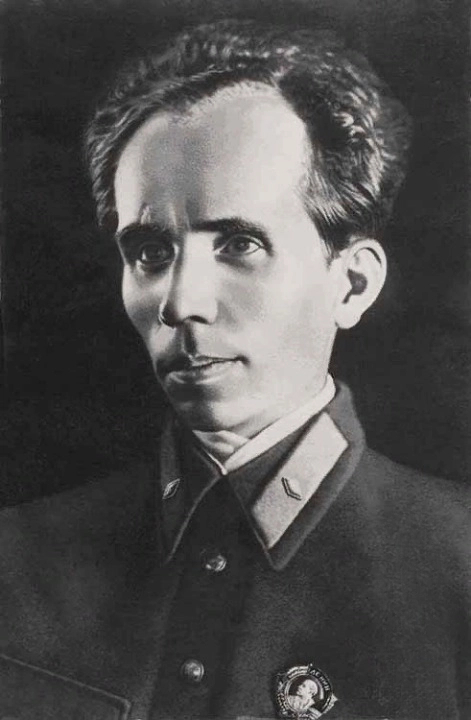
“জীবন মানুষের সবচেয়ে প্রিয় সম্পদ। এই জীবন সে পায় মাত্র একটি বার। তাই, এমনভাবে বাঁচতে হবে যাতে বছরের পর বছর লক্ষ্যহীন জীবন যাপন করার যন্ত্রণা ভরা অনুশোচনায় ভুগতে না হয়, যাতে মৃত্যুর মুহূর্তে মানুষ বলতে পারে আমার সমগ্র জীবন, সমগ্র শক্তি আমি ব্যয় করেছি এই দুনিয়ার সবচেয়ে বড় আদর্শের জন্য— মানুষের মুক্তির জন্য সংগ্রামে।”
- ইস্পাত, ১৯৩২
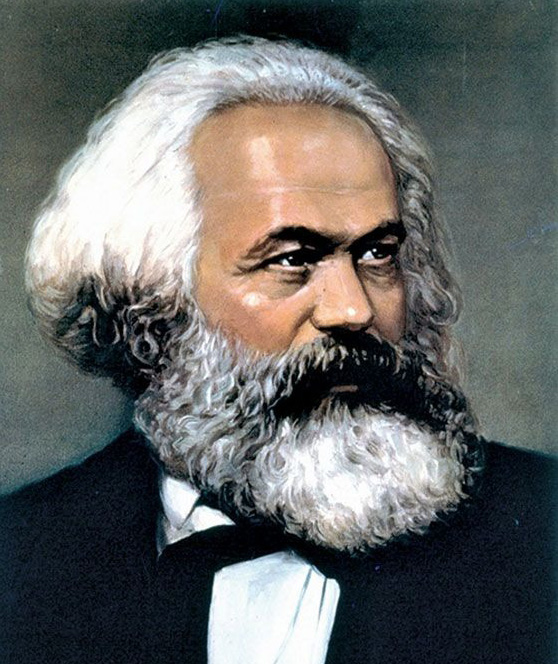
Nothing can have value without being an object of utility.
Source: Das Kapital (Volume I, Chapter 1)
Men make their own history, but they do not make it as they please.
Source: The Eighteenth Brumaire of Louis Bonaparte
From each according to his ability, to each according to his needs.
Source: The Critique of the Gotha Programme
Workers of the world unite; you have nothing to lose but your chains.
Source: The Communist Manifesto