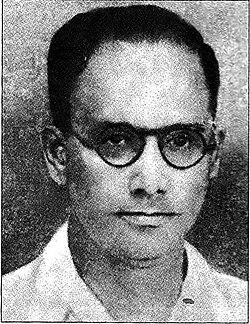
কে আছো জওয়ান—হও আগুয়ান
- ধ্রুবজ্যোতি সাহা


আজকের প্রেক্ষাপটে এই ধারনার মধ্যেকার প্রত্যক্ষ দ্বন্দ্ব কিছুটা অস্পষ্ট হয়েছে, কারণ গোটা পৃথিবীই বিজ্ঞানের অভূতপূর্ব বিকাশের সাক্ষী। কিন্তু তা সত্ত্বেও, বিভিন্ন ধর্মীয় প্রতিষ্ঠান এবং কিছু অতি দক্ষিণপন্থী-সাম্প্রদায়িক রাজনৈতিক শক্তি বিজ্ঞান ও ইতিমধ্যে প্রমানিত বৈজ্ঞানিক তথ্যসমুহকে অস্পষ্ট ধর্মীয় পরিভাষায় ব্যাখ্যা করে, এবং লব্ধজ্ঞানকে ভুল প্রমান করার চেষ্টা করে। আজকের ভারতে যা ঘটছে তা হলো আরএসএস হিন্দুত্বের পরিভাষায় আধুনিক বিজ্ঞানকে বিশ্লেষণ করার চেষ্টা করছে এবং হিন্দু ধর্মগ্রন্থগুলির সাথে আধুনিক বিজ্ঞানের সামঞ্জস্যতা ‘খুঁজে বার করার’ চেষ্টায় ক্রমশ গাজোয়ারি করে যাচ্ছে। এ হল এক বিপজ্জনক প্রবণতা যা প্রতিহত না করলে দেশের বিজ্ঞান ও বৈজ্ঞানিক মূল্যবোধ ধ্বংস হবে।

Remembering Galileo: Some Issues on the Contradiction Between Science and Religion
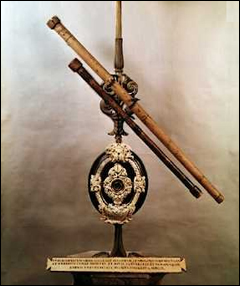
Galileo Galilei (born February 15, 1564—died January 8, 1642) was an Italian natural philosopher, astronomer, and mathematician who made fundamental contributions to the sciences of motion, astronomy, and strength of materials and to the development of the scientific method. He is famous for his telescope. His research and observation including his observations of the phases of Venus supported the Copernican system, which stated that the Earth and other planets circle the sun. Galileo is one of the leading figures of the Scientific Revolution in Europe. His conflict with the religious authority in 17th century Europe seems to remind us of the fundamental incommensurable nature between any secular knowledge system and religion.
Historical Context
Religious orthodoxy came under challenges even with the development of some rudimentary materialist thinking in the ancient world. Mention could be made of Charvaka, a materialist philosophical view that went on to refute the very essence and authority of ‘Sacred’ Scriptures in ancient India. However, with the development of modern science, as a branch of knowledge, roughly from 16th century onward in Europe, religious orthodoxy and the teachings of ‘Holy’ Scriptures came under severe challenges. The foundational narratives of religion which could also be referred to as religious ‘myth’ were challenged by the increasing rise of critical thinking in a liberal sense of the term in the time of Renaissance (15th and 16th Centuries). A flood of scholars in Europe began to think critically about religion, art, society, human nature, law, and freedom. Galileo was influenced by the Renaissance and critical thinking.
The Galileo Affair

European astronomers of the sixteenth century encountered two competing systems of mathematical astronomy. On the one hand, in the ancient system of Ptolemy, the earth was the center of the universe. On the other hand, the theory of Copernicus (1543) placed the sun at the center instead. By the early 17th century, the view of Copernicus, as opposed to that of Ptolemy might have enjoyed some currency at least in the educated circle of Europe. At least the letter, written by Galileo to Johannes Kepler in 1597, seems to suggest his familiarity with and an acceptance of the Copernican theory. Galileo’s History and Demonstrations Concerning Sunspots, published in 1613, reports observations consistent with the Copernican view. The attitude of the Church authorities towards the Copernican view first became clear in 1615-16. The consultants of the Holy Office condemned two propositions as “absurd in philosophy.” The first had to do with the position and immobility of the sun, while the second dealt with the position and motion of the earth. Based on this report, the Holy Office prohibited any future publication of any book that taught these two propositions. It is interesting to note here that Galileo’s work was not explicitly mentioned, but he had been formally notified of the condemnation of the Copernican theory. What we might think of as the Galileo Affair, where Galileo was put in a trial, took its final shape in 1633. The trial did not focus on falsifying the Copernican theory which Galileo supported in his book Dialogue Concerning the Two Chief World Systems, which was published in 1632. Rather the focus was on whether he had obeyed the instructions given to him in 1616. The tribunal was not convinced by the arguments of Galileo and noted that “this is still a very serious error since there is no way an opinion declared and defined contrary to Holy Scripture may be probable.” In the view of the Roman tribunal, anything that contradicts the authority of Scripture can only be described as false. Galileo was forced to confess his ‘crime’. It could be mentioned here that Galileo’s discovery and his unflinching support for the Copernican theory must have been informed both by his mathematical logic and observations of the sky. In the fall of 1609 Galileo began observing the heavens through his telescope. He found that the telescope could help him comprehend the mystery of stars. These discoveries were path breaking in terms of formulating the modern understanding of the universe. But it was, indeed, unfortunate that he had to submit (unwillingly) to the authority of the Roman church. Finally Galileo was placed under house arrest for the remaining nine years of his life and died on 8th January, 1642. Today, Galileo is recognized as the “father of modern science.”
Concluding Notes: Science and Religion: Fundamentally Incommensurable
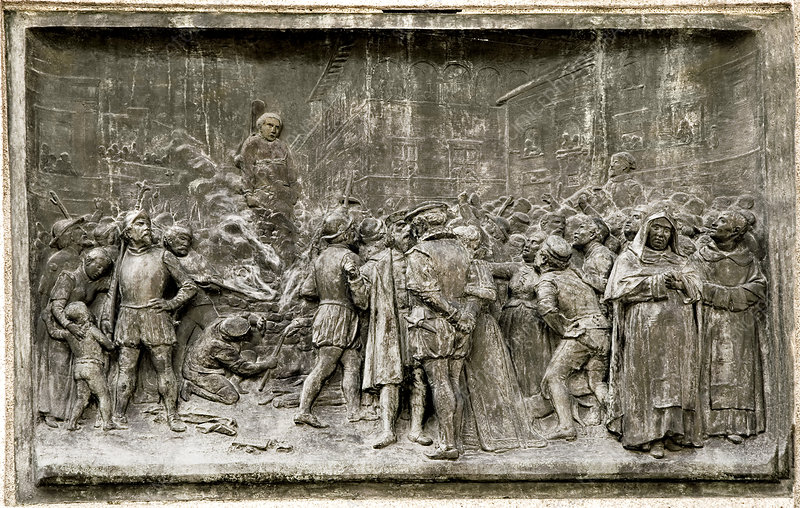
Those are the facts of the Galileo affair, at least in broad outline. The immediate disagreement between Galileo and his accusers seems to suggest the contradiction between secular or scientific knowledge and religion.
Science and religion must be seen as two different worldviews. The fundamental characteristic of these two views are diametrically opposite that we can’t even think of a peaceful co-existence between the two. Contradiction between science and religion is nothing new. Religion is based on myths, stories and seems to encompass and ‘guide’ the ritual and cultural practices, to some extent, of a particular community or a nation on the basis of faith. According to the view, posed by the anthropologists, religious myths are here referred to as foundational narratives which apparently tell ‘sacred’ stories of origins or transformations of the universe and shape the rituals of the communities and develop moral and ethical understanding etc. In fact, these myths could be seen in every religion of the world. Mention could be made of the most obvious story of Creationism in Christianity, which tells the beginning of the world and seems to shape the Christian understanding of sexuality and sin. Similarly, in the myths of the Hindu Scripture, the universe was created by Brahma, the creator who made the universe out of himself. Science, on the other hand, does not deal with any myth. Scientific knowledge is based on the fact and evidence. Science does not, interestingly, claim to give us a ‘certain’ and truthful view of the world. In this sense, science gives us an approximate truthful view of the universe, as science recognizes the duality of Nature. In fact, the grandeur of science resides in its ability to recognize the fallibility of the subject. Thus, science, unlike religion, is not guided by any ‘Holy’ Scripture and myths and continues to challenge any theory or knowledge based on facts in the face of any anomaly. Apart from this ‘myth vs. facts’ demarcation, one could also distinguish between science and religion in terms of their subject matters. Science deals with the Natural world. The task of science is to help us comprehend the Natural world (In a way it helps us discover the set of rules that govern Natural world) and in the process of comprehending, we change the world. Religion, on the other hand, transcends beyond physical and deals with the supernatural. While scientific practice gives us the capacity for changing the world, the religious practice preaches one to understand and take the world as it is. It is in this sense; science is Enlightenment (In the language of Kant, “Enlightenment is man’s release from his self-incurred tutelage”). Thus, there is no denying that science and religious faiths do not co-exist together. It is against the background of such contradiction between scientific knowledge and religious orthodoxy that one might be able to understand the famous Galileo Affair.
One might not be able to find such a direct contradiction in today’s context, given that the world has witnessed unprecedented development of science. But nonetheless, different religious institutions and some ultra right wing communal parties try to appropriate science and scientific knowledge and seek to interpret it in some obscure religious terminology. Precisely this has been the case in India where RSS has tried to appropriate modern science in a typical Hindu terminology and ‘finds’ modern science in Hindu Scriptures. This is a dangerous trend. If not resisted, this will lead to a complete destruction of science and scientific values in the country.
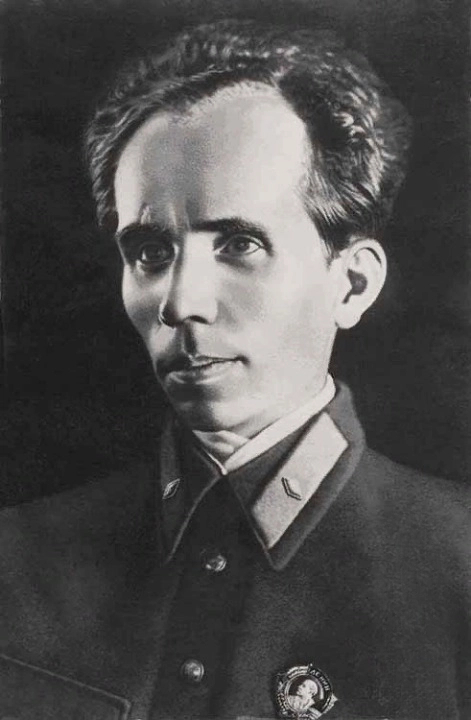
“জীবন মানুষের সবচেয়ে প্রিয় সম্পদ। এই জীবন সে পায় মাত্র একটি বার। তাই, এমনভাবে বাঁচতে হবে যাতে বছরের পর বছর লক্ষ্যহীন জীবন যাপন করার যন্ত্রণা ভরা অনুশোচনায় ভুগতে না হয়, যাতে মৃত্যুর মুহূর্তে মানুষ বলতে পারে আমার সমগ্র জীবন, সমগ্র শক্তি আমি ব্যয় করেছি এই দুনিয়ার সবচেয়ে বড় আদর্শের জন্য— মানুষের মুক্তির জন্য সংগ্রামে।”
- ইস্পাত, ১৯৩২
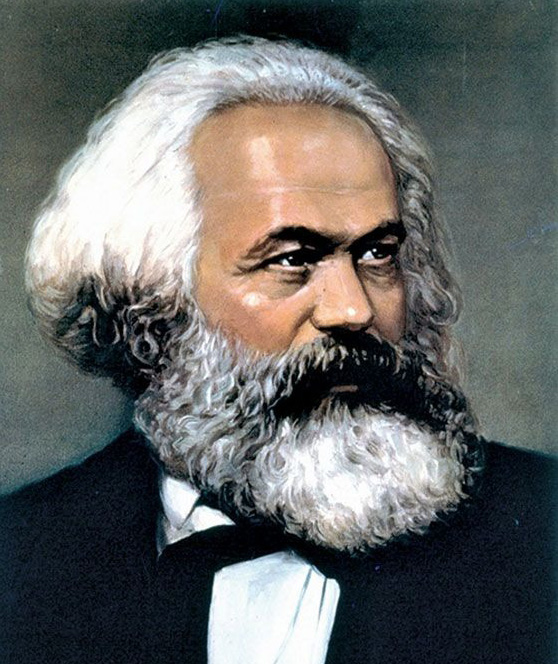
Nothing can have value without being an object of utility.
Source: Das Kapital (Volume I, Chapter 1)
Men make their own history, but they do not make it as they please.
Source: The Eighteenth Brumaire of Louis Bonaparte
From each according to his ability, to each according to his needs.
Source: The Critique of the Gotha Programme
Workers of the world unite; you have nothing to lose but your chains.
Source: The Communist Manifesto