|
বিজ্ঞান ও বিজ্ঞানসম্মত চেতনাঃ আধুনিক জীবনের উত্তরাধিকারSarsen Hazra |
Its truth-objective and immutable— are capable of being read only through the rigorous tools of experiment and reason. To read the Book of Nature through the lens of the Book of Scripture is not just piety but also intellectual blindness. |
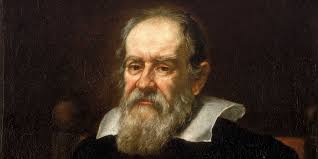
Introduction Galileo Galilei and Stephen Hawking are not only the names of two scientists, these towering personalities are beacon against obscurantism and dogmatism too. In the era while automation is integrating with artificial intelligence, the world is experiencing the rise of far right and neo-fascist political forces globally. The admixture of neo-technological and Neo-fascist policies is busy to dismantle the very basics of the democratic fabric of the hard earned modern life where education and scientific temper are essentials. The political resolution adopted in the 24th party congress of CPI(M) highlights, “Another aspect of this attack is the broader assault on science, scientific temperament and rational thinking. Belief-based content has been promoted, a hallmark of moves towards authoritarian and fascistic principles. This direction not only fosters communal and identity-based hate-mongering but also redefines the democratic and secular identity of the republic and its citizens along Hindutva-oriented lines. This shift has been particularly evident in the appointment and capture of specialised policy bodies and institutions, extending up to universities and other higher education establishments.” Galileo was punished for his views, in 1642. Three hundred years later, in 1942 Stephen Hawking born. The day for the two is 8th of January. On this rationale the web desk decided to publish an article. It’s not only to tribute the scientists, it’s an attempt to re-read and realise their ‘dissent’ too. Dissent doesn’t means to ‘oppose’ only, it’s the core of a mindset ready to enquire everything, for a better understanding of course. It’s a legacy of modern life. 1 The Rise of Religious Dogmatism in Contemporary Indian Society Hindutva ideology has increasingly promoted pseudoscientific claims those ancient Hindu scriptures anticipated modern scientific discoveries, thereby distorting education and public discourse in India. Such assertions include the notions that ancient Indians invented airplanes through ”vimanas” described in Vedic texts, possessed stem cell technology (evidenced by the Mahabharata’s account of the Kauravas’ birth), and developed advanced technologies like drones and missiles [14],[2]. Highprofile political figures have endorsed these views; for instance, citing Lord Ganesha’s elephant head as proof of ancient plastic surgery, claiming ancient India had airplanes, drones, and missiles and more [13],[10]. These claims extend to assertions that Vedic theories surpassed Einstein’s relativity or that mythological figures like Hanuman pioneered space travel [15]. This infiltration has manifested in academic and governmental platforms. The Indian Science Congress, once a prestigious event, faced repeated criticism for hosting sessions, promoting such pseudoscience, leading to its postponement in 2024 and subsequent years—amid funding-withdrawal and accusations of politicization [8],[1]. Government support shifted toward events organized by Vijnana Bharati, an RSS-affiliated body accused of blending Hindutva with ”Swadeshi science,” including unverified claims about cow products curing diseases [9]. Although initiatives like the national ”cow science” exam appear dated to 2021, similar pseudoscientific endorsements persist in policy and cultural narratives, reinforcing hierarchies of caste, gender, and ecology under the guise of ”reactionary modernism” [12]. Critics argue that these developments stifle critical thinking, undermine evidence-based inquiry, and parallel historical instances where religious dogma suppressed scientific progress [16]. In Bengal and across India, such authoritarian imposition of mythology as science, threatens our rational temperament and societal advancement. Thorough this essay we will try to examine these trends through the historical defiance of Galileo against ecclesiastical geocentrism and Stephen Hawking’s cosmological models rejecting divine intervention, highlighting the enduring need for empirical truth over dogmatic assertion. 2 The Blueprint for Scientific Autonomy and the Battle It Defined The modern peddlers of ”Vedic science” are not making an innocent error. They are resurrecting and weaponizing a mode of thought that the Scientific Revolution, forged in Galileo’s conflict, was built to destroy: the submission of empirical evidence to doctrinal authority. To understand the profound danger of this regression, we must revisit the foundational moment when the method for discerning physical truth was carved out from the domain of faith. On around 1600’s the immediate conflict cosmology centered on the Copernican heliocentric model versus the Church-endorsed geocentric worldview. Yet, the true battle was epistemological. It was not merely just science versus religion, but the emergent scientific methods which prioritize observations, mathematical reasoning, and reproducible demonstration. It started clashing with a system that subordinated our natural inquiry to scriptural literalism and Aristotelian dogma [3]. The question was: what constitutes legitimate knowledge about the natural world? In his seminal 1615 ”Letter to the Grand Duchess Christina,” Galileo crafted the definitive defense for the autonomy of this new method. He argued not against religion, but for a clear boundary between its domain and that of science. His argument specifically indicated as ”The intention of the Holy Ghost is to teach us how one goes to heaven, not how heaven goes”[4]. This is the principle of separate magisterial religion governs faith, morals, and salvation, while science investigates the mechanisms of the physical universe. For Galileo, neither should dictate to the other; to force Scripture to adjudicate on planetary motion was a fundamental category error that guaranteed falsehood [4]. Galileo extended this through the ”Two Books” metaphor. God, he argued, authored two volumes: the Book of Scripture and the Book of Nature. The first, written for human salvation, uses allegory accessible to all. The second, however, ”.... is written in the language of mathematics”[4]. Its truth-objective and immutable—are capable of being read only through the rigorous tools of experiment and reason. To read the Book of Nature through the lens of the Book of Scripture is not just piety but also intellectual blindness. Humanity(even if it is created by ”GOD”) is/was endowed with senses and intellect. Thus, precisely to read this second book is a duty that no religious authority could rightfully veto [4]. The politics of language and patronage further illuminate the clash. Galileo’s strategy itself defied control. His early telescopic discoveries in ”Sidereus Nuncius” were reported in Latin, the lingua franca of scholars and clergy. However, his decisive work, ”Dialogue Concerning the Two Chief World Systems”, was deliberately composed in Italian—the vernacular. This was a radical democratic act, designed to bypass scholarly gatekeepers and make the Copernican debate accessible to the literate public, from merchants to nobles. Simultaneously, the personal dimension proved fatal. Pope Urban VIII, his former patron, had permitted the work on condition it present heliocentrism as a mere hypothesis and include the Church’s orthodox argument. Galileo’s Dialogue was widely read as mocking the Pope’s favored view. The confluence was explosive: a controversial idea, removed from the controlled Latin sphere and unleashed upon the public, while seemingly insulting the highest authority. Urbanites may have underestimated how a vernacular text could democratize a heresy. The resulting trial was not solely about cosmic order, but about institutional panic over the loss of epistemic control. This moment crystallizes the eternal tension: text the arguement of the authority versus the authority of a verified argument. This hard-won epistemological framework is precisely what the Hindutva project violently rejects. It commits the very category error Galileo identified, but in reverse. Where Galileo pleaded with theologians not to force the Bible to explain Jupiter’s moons, today’s ideologues force the Vedas and Puranas to disclose the secrets of quantum mechanics, aerospace engineering, and stem-cell technology [2],[10],[13]. This is not the continuation of science but a regression towards its pre-history. It reinstates the primacy of textual authority—but now the nationalist-religious rather than ecclesiastical—over empirical demonstration. they’re seeking to undo the autonomy of inquiry that Galileo’s struggle helped establish. By dismantling this firewall, the project exposes all of science, from the mechanics of flight to the origin of the cosmos, to the whims of political dogma. Defending Galileo’s blueprint is therefore not an academic exercise. It is a civilizational defense of the mind’s right to inquire freely—a foundational fight for Bengal’s rationalist tradition and a necessary precondition for the work of thinkers like Stephen Hawking, who would apply the same methodological rigor to the question of creation itself. 3 Hawking—The Frontier of the Galilean Project Centuries later, the project Galileo began reached its most ambitious frontier, applying the laws of physics not just to the heavens, but to the origin of the heavens themselves in primordial cosmology as well as quantum field theory in curved space-time[11][5], informs this analysis. Hawking’s work systematically extended scientific inquiry into the universe’s fundamental nature, challenging the need for divine explanations. First, with Roger Penrose, he proved singularity theorems showing that under general relativity the universe must have a beginning which is [7] a singularity that he viewed not as proof of a creator, but as a challenge for physics to resolve [7]. His discovery of Hawking radiation later demonstrated that black holes are not eternal, undermining notions of unchanging cosmic structures often associated with religious permanence[6]. The culmination of this effort is the No-Boundary Proposal co-authored with James Hartle, which states that “the boundary conditions for the universe are that it has no boundary”[5]. This model offers a self-contained quantum-gravitational description of cosmic origins, illustrating how physics can address the question of creation without invoking/needing an external agent. Thus, it represents the advancement human race to understand the ultimate of Galileo’s “Book of Nature.” Hawking used the very laws of some books, named—quantum mechanics and relativity— to interrogate the existence itself, finding no logical necessity for an outside “Author”[4]. He explicitly defended this naturalistic worldview against dogma, stating: “There is a fundamental difference between religion, which is based on authority, and science, which is based on observation and reason. Science will win because it works”. In A Brief History of Time he posed the defining question: “So long as the universe had a beginning, we could suppose it had a creator. But if the universe is really completely self-contained. . . What place, then, for a creator?”. Later, he affirmed plainly: “There is no God. No one directs the universe”. The religious and political backlash becomes clear in this light. When cosmology provides naturalistic models for origins and black-hole dynamics, it will of course definitely and directly challenges divine-creation narratives, including Puranic ones like the Hiranyagarbha cosmic egg. Hence, to claim authority, ideologues must discredit the scientific method—the very autonomy Galileo won—and substitute it with “scripture-as-science,”. Thus, asserting mythological precedence on science over modern theories[9] can delay to accept the truth but it can’t avoid it. This is why figures in the introduction proclaim “Vedic science was first”, it is a defensive maneuver to re-insert dogma into the domain Galileo liberated and ensuring religious narratives retain cosmic primacy. Introduction: Web Desk Images: Social Media
References [1] Indian science congress postponed amid tussle between organisers, govt. The Indian Express, 2024. [2] Arbab Ali and Nadeem Sarwar. Amid indian nationalism, pseudoscience seeps into academia. Undark, jul 2023. Online news article. [3] Maurice A. Finocchiaro. Defending Copernicus and Galileo: Critical Reasoning in the Two Affairs, volume 280 of Boston Studies in the Philosophy and History of Science. Springer, Dordrecht, 2010. [4] Galileo Galilei. Letter to the grand duchess christina of tuscany. Manuscript letter, 1615. [5] J. B. Hartle and S. W. Hawking. Wave Function of the Universe. Phys. Rev. D, 28:2960–2975, 1983. [6] S. W. Hawking. Particle Creation by Black Holes. Commun. Math. Phys., 43:199–220, 1975. [Erratum: Commun.Math.Phys. 46, 206 (1976)]. [7] S. W. Hawking and R. Penrose. The Singularities of gravitational collapse and cosmology. Proc. Roy. Soc. Lond. A, 314:529–548, 1970. [8] S Krishna. Attempts to poison and choke the indian science congress. People’s Democracy, jan 2024. Online article from the Communist Party of India (Marxist) publication. [9] Sanjay Kumar. In india, hindu pride boosts pseudoscience. Science, 363(6428):679–680, 2019. [10] Santhosh Kumar. Why the cancellation of the indian science congress 2024 is proper? Medium, jan 2024. Blog post. [11] Jean-Luc Lehners. Review of the no-boundary wave function. Phys. Rept., 1022:1–82, 2023. [12] Meera Nanda. Prophets Facing Backward: Postmodern Critiques of Science and Hindu Nationalism. Rutgers University Press, 2003. Indian edition (Paperback, 325 pages) published by Permanent Black. The book examines how postmodern critiques of science unwittingly aid Hindu nationalist claims of ’Vedic Sciences’. [13] Manya Sawhney and Arshdeep Sahni. Myth meets science: Indian politicians make mythologybased science claims. Outlook India, jun 2023. Online news article. [14] Science News Staff. Debate flares over western links to indian lab pushing cow urine as medicine. Science, 363(6428):679–680, feb 2019. News article. MeSH terms: Hinduism; Religion and Medicine; Cattle; Manure; Urine; Animals; Humans; India. [15] The Economic Times Online. Pushpak viman before wright brothers’ flight? shivraj chouhan sparks fresh debate on india’s ancient tech claims. The Economic Times, aug 2025. News report on political claims of ancient Indian aviation technology. [16] Vasudevan Mukunth. Science and nation-building. The Hindu, aug 2025. প্রকাশের তারিখ: ০৮-জানুয়ারি-২০২৬ |
© কপিরাইট ভারতের কমিউনিস্ট পার্টি (মার্কসবাদী) - পশ্চিমবঙ্গ রাজ্য কমিটি, সর্বস্বত্ব সংরক্ষিত ভারতের কমিউনিস্ট পার্টি (মার্কসবাদী) - পশ্চিমবঙ্গ রাজ্য কমিটি
|